Writing across genres, I draw on archival research and oral histories to consider questions of secrecy, connection, and border making.
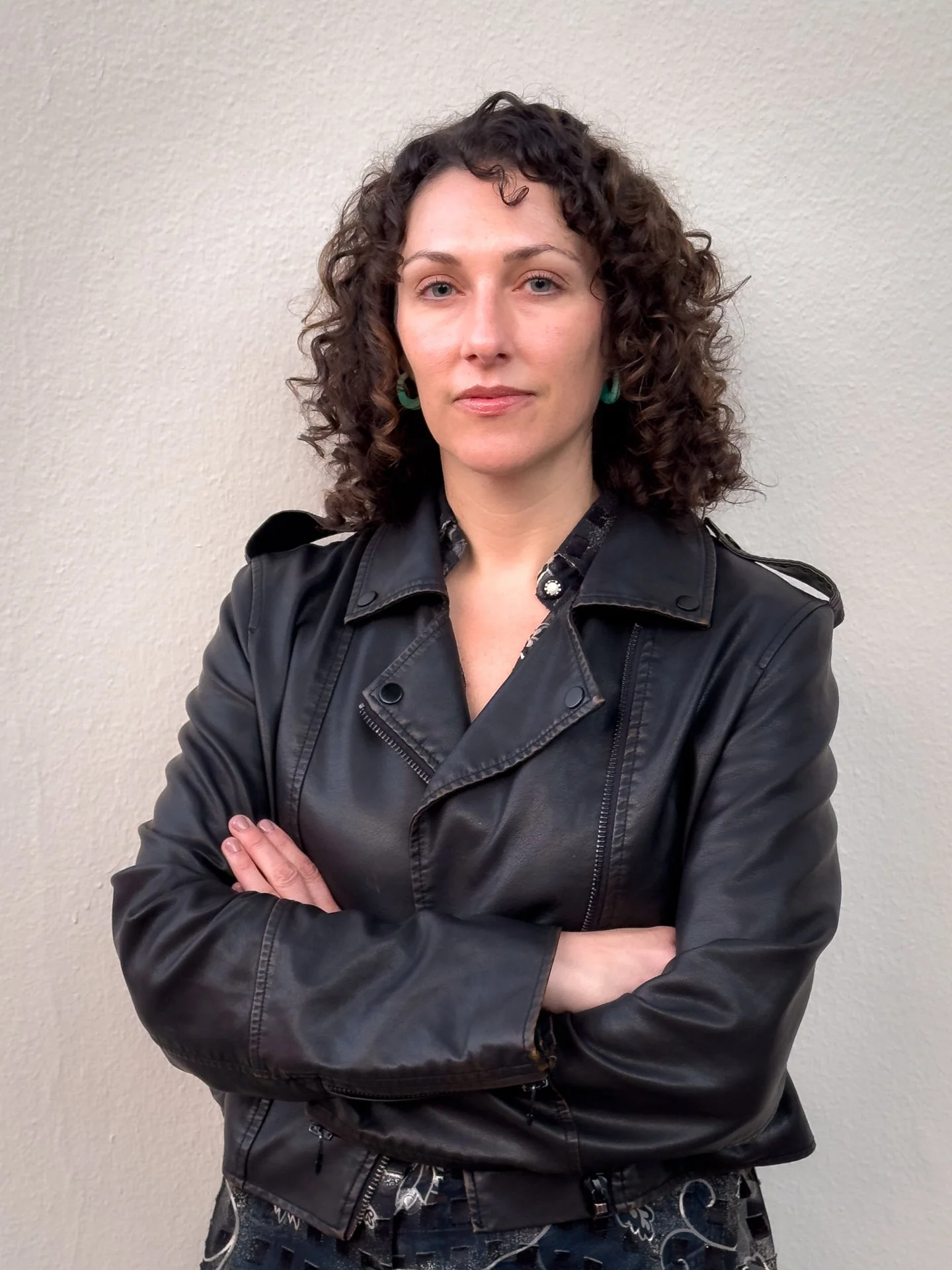
Vanessa Freije is an award-winning historian and writer whose work is inspired by twenty years living and researching in central Mexico. She received her PhD in Latin American History from Duke University (2015), and her academic research focuses on the history of technology, information, and media politics in Latin America, particularly Mexico. She is Associate Professor of International Studies and History at the University of Washington, where she chairs the program in Latin American and Caribbean Studies.
Vanessa writes across genres, drawing on archival research and oral histories to consider questions of secrecy, connection, and bordermaking. Her reporting and essays have appeared in Al Jazeera, Atlas Obscura, Public Books, Tahoma Literary Review and elsewhere. Her academic and creative writing have received support from the National Endowment for the Humanities, Fulbright-García Robles, Artist Trust, and Seattle City of Literature, among other organizations. She is currently working on her debut novel, which is represented by Danya Kukafka (Trellis Literary). She lives between Seattle and Mexico City.
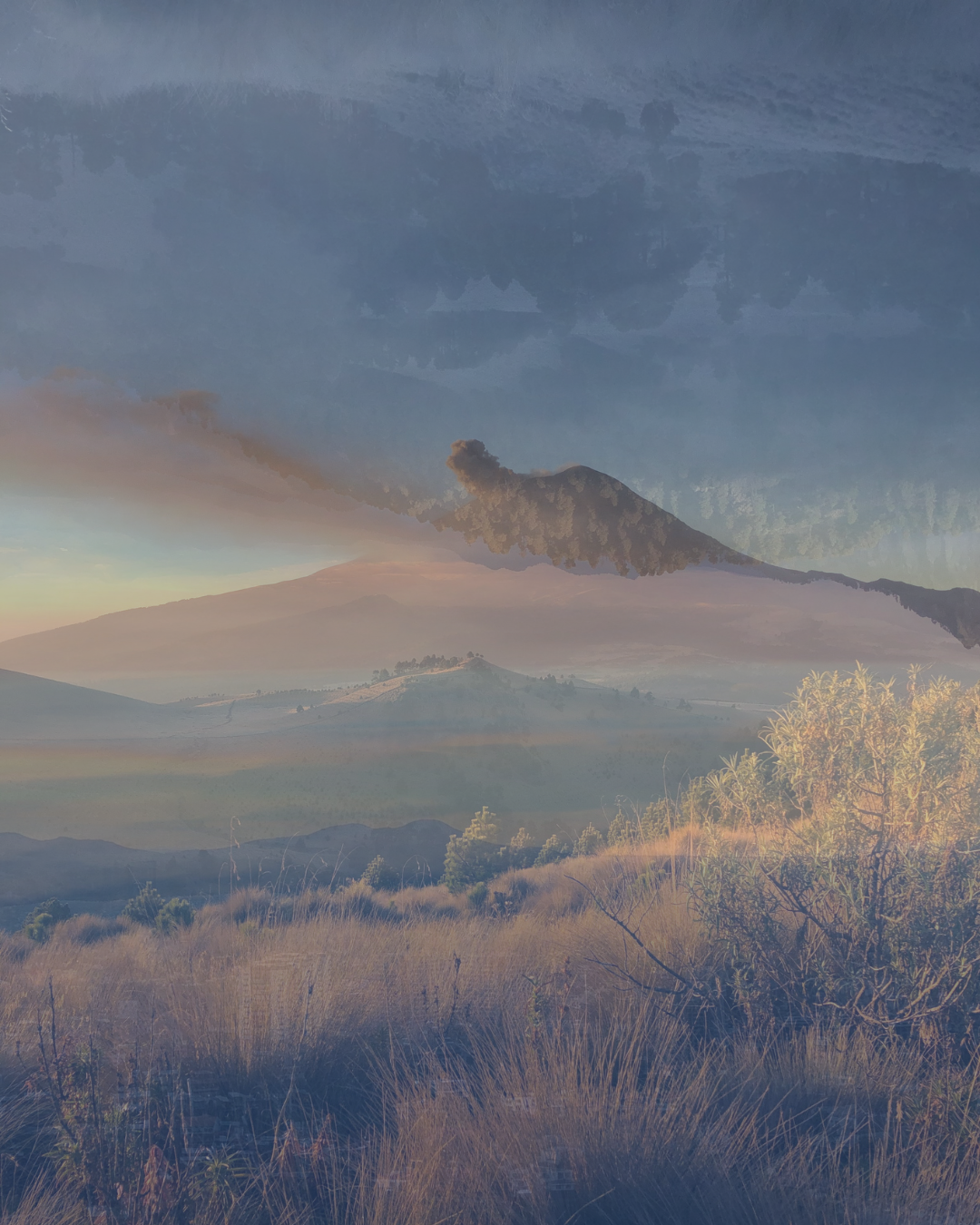
An overlay of photos from the Valley of Mexico: the foothills of Popocatépetl, a view from a hike up Ajusco, and a Mexico City skyline with the volcanos in the background.
About my work:
Creative writing
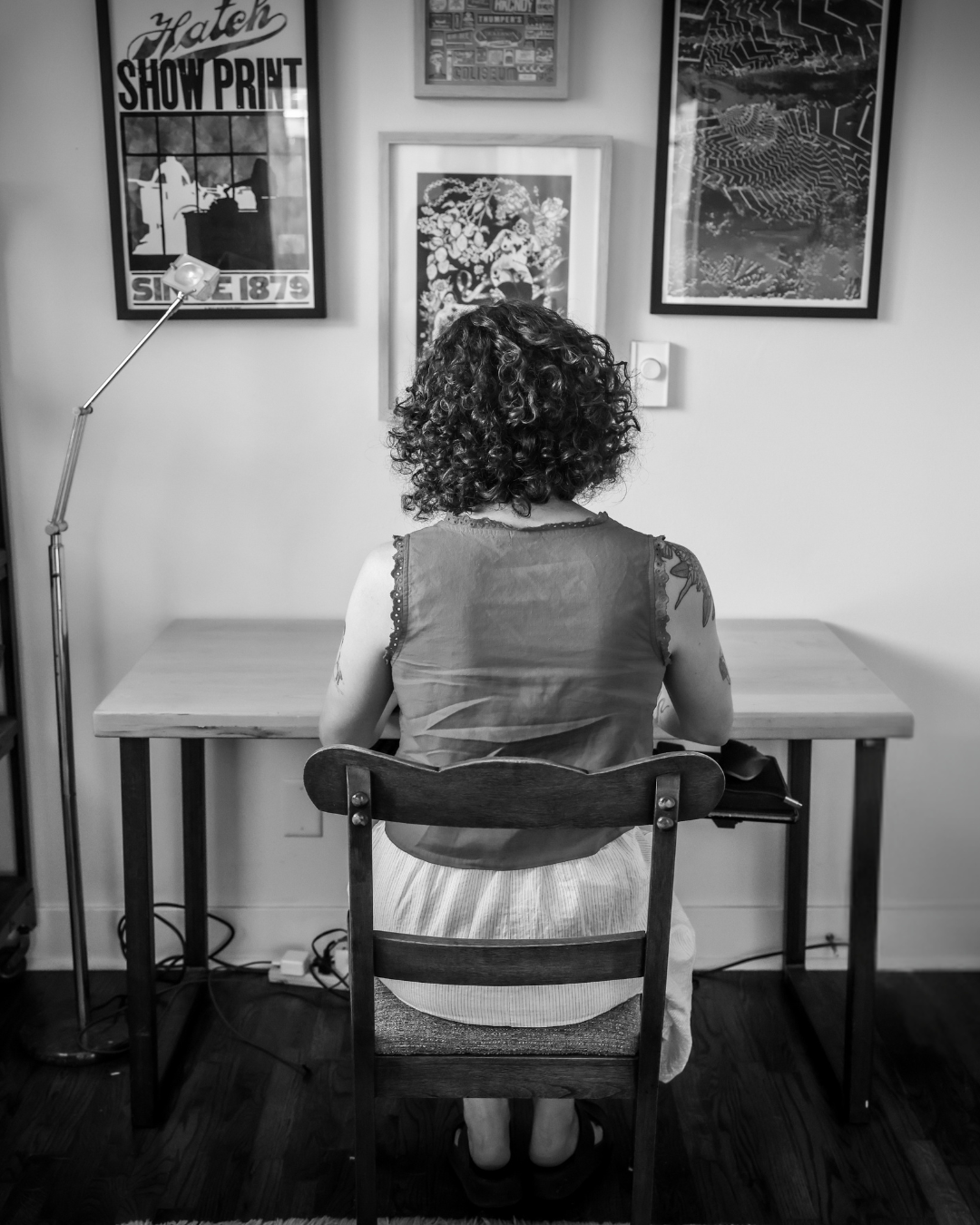
My creative work—both fiction and non-fiction—draws upon my experience growing up along the U.S.-Mexico border, and my twenty years of living and researching in Mexico. You can see my publications below. I am currently at work on a debut novel, set in the Valley of Mexico in 1994.
Academic research
I am the author of Citizens of Scandal: Journalists, Secrecy, and the Politics of Reckoning in Mexico (you can find more on that book below). My academic articles have explored rumors, the right to know, information sovereignty, and more. I am currently writing a book on communications satellites in Mexico since 1968. For more information on my academic research, please visit my University of Washington faculty page.
Public engagement
I teach full-time as an associate professor of International Studies and History at the University of Washington, where I offer courses on Latin American history and media. Beyond teaching, I have translated my academic research to wider audiences through published essays, media appearances, public talks, and by providing expert witness testimony in asylum cases.
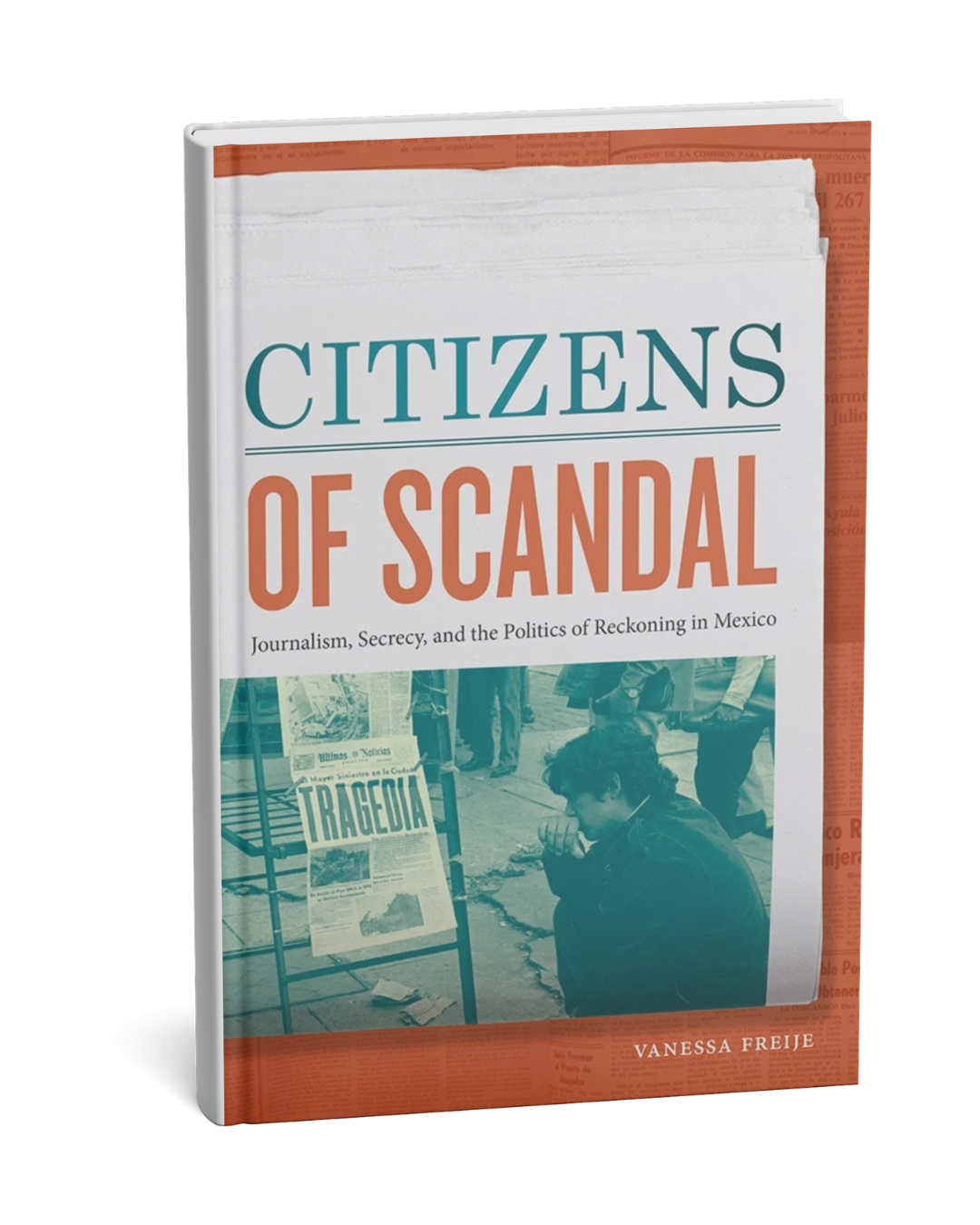
In Citizens of Scandal, Vanessa Freije explores the causes and consequences of political scandals in Mexico from the 1960s through the 1980s.
Tracing the process by which Mexico City reporters denounced official wrongdoing, Freije shows that by the 1980s political scandals were a common feature of the national media diet. News stories of state embezzlement, torture, police violence, and electoral fraud provided collective opportunities to voice dissent and offered an important, though unpredictable and inequitable, mechanism for political representation.
The publicity of wrongdoing disrupted top-down attempts by the ruling Partido Revolucionario Institucional to manage public discourse, exposing divisions within the party and forcing government officials to grapple with popular discontent. While critical reporters denounced corruption, they also withheld many secrets from public discussion, sometimes out of concern for their safety. Freije highlights the tensions—between free speech and censorship, representation and exclusion, and transparency and secrecy—that defined the Mexican public sphere in the late twentieth century.
Praise for Citizens of Scandal
Reporting and essays:
“Good Faith Marriage,” Tahoma Literary Review (2025)
“When Journalists Lose Public Support, Violence Abounds,” Public Books (2023)
“How This Tiny Mexican Town Has Saved Their Monarch Butterflies—For Now,” Atlas Obscura (2023)
“‘You’re not welcome’: Mexico City residents decry Airbnb,” Al Jazeera (2022)
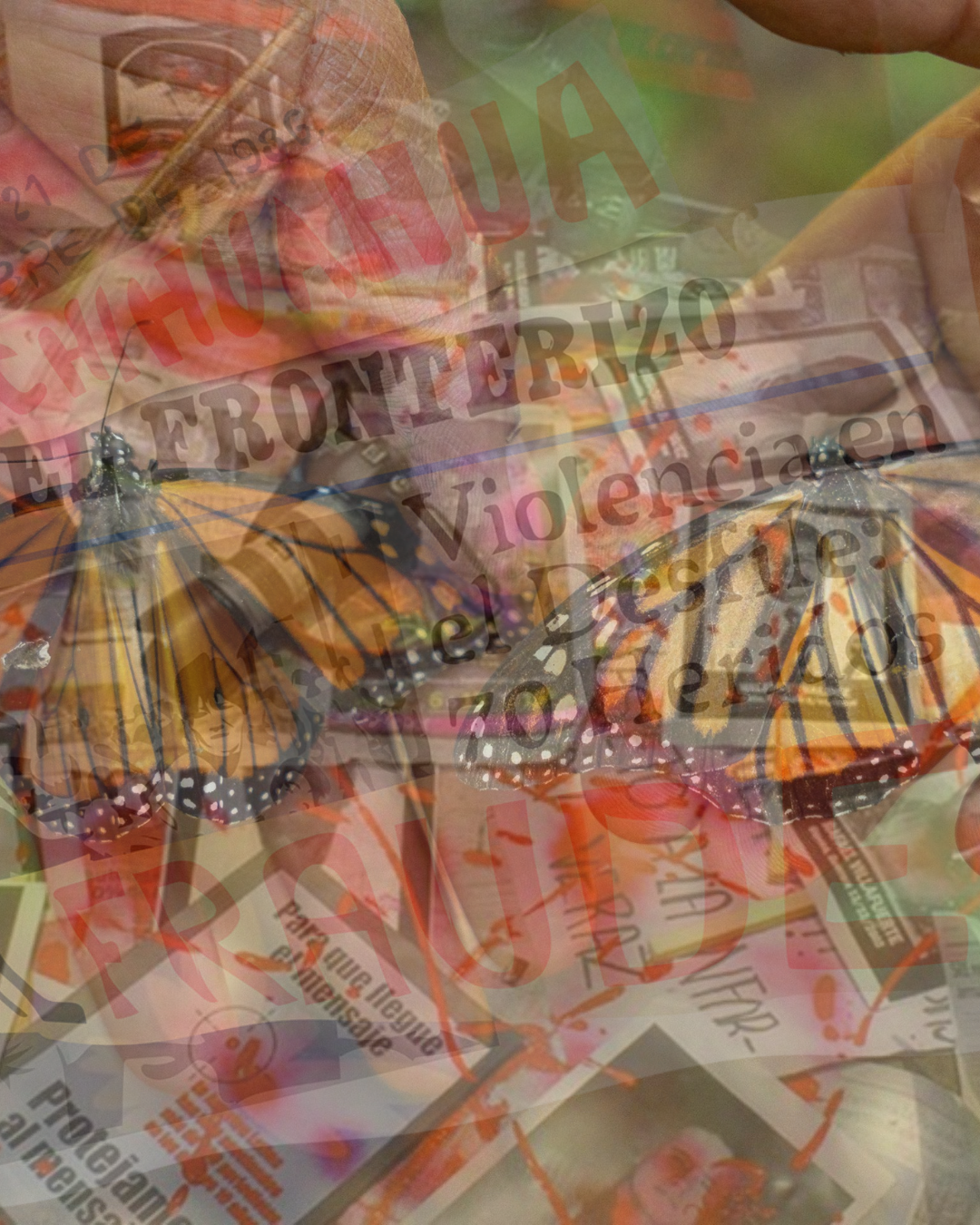
“El arduo trabajo de hacer fraude. Ganar elecciones y perder legitimidad en Chihuahua,” Pie de Página (2021)
“Australia, fighting Facebook, is the latest country to struggle against foreign influence on journalism,” The Conversation (2021)
Academic book project:
A Signal in Every Corner of the Country: Connecting Mexico in the Satellite Era traces the history of outer space communications in Mexico, arguing that telecommunications via satellite became the central battleground for struggles over global integration, political representation, and rural marginality. Based in eighteen months of archival and ethnographic research, this project follows the expansion of satellite services beginning in 1968 with the construction of the Tulancingo Satellite Earth Station and concluding with the 2013 installation of some 10,000 rural internet hubs, the government’s last major program of this kind before it abdicated to private industry. By tracing the various challenges to achieving connectivity—from organized crime to natural disasters to state disinvestment—this book project explores what connecting to outer space satellites meant for a country seemingly on the periphery of the global space race.
Featured publication
Good Faith Marriage (Tahoma Literary Review)
“I’ve taken 1,112 photos since December 8, 2023, the day we got married. Three hundred ninety-three are from my research in historical archives, large blocks of white and sepia in my camera roll. Ninety-six are of my dog. Sixty-two are of myself and my husband Enrique together. Just five are of us with family. These photographs are the ones that count most for U.S. Immigration and Customs Services (USCIS).
I generally don’t create typologies of my camera roll, but assembling a “family-based” petition for my husband’s green card has changed that, along with much else. Our photographs have a new purpose: to prove to USCIS that our relationship is real, our love genuine. It is true, there are cases of fraud. Some people will pay as much a $30,000 to marry a US citizen, which offers the simplest path to permanent residency. To prove our case, we dutifully compile 300 pages of forms, sworn affidavits, bank statements, shared phone accounts and light bills, an overwhelming display of our “cohabitation” and “comingling of finances,” two key metrics of a “good faith marriage.” I admire the final product and even take a picture of the thick stack of papers before gingerly tucking it into an over-sized manila envelope to deliver to our lawyer. I document our documentation, wondering at how our marriage could generate so much paperwork.”
My debut novel, Trust Fall
Set in central Mexico, against the turbulent backdrop of the 1994 Zapatista uprising and the AIDS crisis, the novel explores the painful entanglements of family and the consequences of keeping secrets from the people one loves. This novel has received support from Artist Trust, Community of Writers Workshop (2026), Seattle City of Literature, and Tin House Summer Workshop (2025), and is represented by Danya Kukafka (Trellis Literary).